
Protect yourself and the community from the rising threat of scams

In 2025, over $2 Billion was lost to scams in Australia. Scams have now become one of the largest threats to everyday Australians, with older people, those with cognitive or language challenges, and those living alone being the most at risk in our communtiy.

On June 20, Co.As.It. partnered with Custodio to host an information session to help the community remain safe and aware.

The aims of this session were:

  • Learn how to stay safe online
  • Find out what to do if you or someone you know is scammed
  • Understand the practical steps you and your family can take to protect yourselves and your loved ones


What is a Scam?

A Scam is a crime, with the aim of stealing money or information through deception, fraud, and lies. This can be done digitally, by someone contacting you over the phone or on the computer, or in person, by someone claiming to be a tradesperson or providing financial services and support.

Anyone can be scammed and become a victim of fraud. There are scams designed for almost everyone and there is no shame in being scammed. It important to remember that if you have been scammed, you must act fast and report it so the issue can be resolved and other people can be protected from being scammed.

Common Types of Scams

PHONE SCAMS

Scammers call or text pretending to be your bank, the ATO, the police, or a relative in trouble. They make the number look official, create panic, and push you to act before you can think — for example, moving money or sharing security codes.

WARNING SIGNS

  • An unexpected “urgent” call about your account or a debt
  • Pressure to act now — and to keep it secret
  • Asked to transfer money or buy gift cards
  • Asked to read out a one-time passcode

HOW TO PROTECT YOURSELF

  • Hang up — you don’t have to stay on the line
  • Call back on a number from your card or bill
  • Never share one-time passcodes with anyone
  • Your bank & police will never ask you to “move money to keep it safe”

ROMANCE SCAMS

Online or in person, the offender gains your affection and trust, then uses the illusion of a romantic relationship to manipulate you into sending or transferring money. They invest significant time — sometimes even moving in together — building trust before executing elaborate cons such as fake investments, sudden emergencies, or identity theft.

These relationships don’t always need to be ‘romantic’ but can use emotional manipulation through friendship or familial connection. For example, some victims of fraud have been targeted by a relative or neighbour.

WARNING SIGNS

  • Quick, intense declarations of love
  • Won’t meet in person or on video call
  • Always an emergency that needs money
  • Stories of fake investments or sudden crises

HOW TO PROTECT YOURSELF

  • Never send money to someone you haven’t met in person
  • Talk to family or friends about a new partner
  • Be wary of anyone moving you to private chat
  • Slow down — real relationships aren’t built on urgency
Romance Scam

INVESTMENT SCAMS

You’re offered “guaranteed” high returns with little or no risk — often in crypto, shares or property, and sometimes after meeting on social media or a dating app. Slick websites and dashboards show fake “growth”, small early payouts build confidence, then you’re pressured to invest more or pay “fees” to release funds that never arrive.

WARNING SIGNS

  • Promises of guaranteed or unusually high returns
  • Pressure to invest quickly, or to keep it private
  • Unlicensed “advisers” found online or via social media
  • Fees demanded before you can withdraw

HOW TO PROTECT YOURSELF

  • Check the adviser holds an ASIC licence
  • If it sounds too good to be true, it is
  • Use Moneysmart’s “check before you invest”
  • Get advice from a licensed, independent adviser
Investment Scam

FAMILY TRUST AND INHERITANCE SCAMS

When large estates are at stake, underhanded tactics can emerge from coercion to outright forgery. Usually targeting an ageing or vulnerable family member.

HOW IT HAPPENS

  • Undue influence & coercion — relatives or carers may manipulate, threaten or isolate a vulnerable person into changing their will
  • Executor / trustee misuse — the person handling the estate self-deals, siphons assets, fails to communicate with rightful beneficiaries
  • Forged documents — faked signatures or “newer” fake wills to disinherit siblings and claim entire fortune

HOW TO PROTECT YOURSELF

  • Use an independent solicitor for any will changes
  • Keep more than one trusted person informed
  • Be alert if one person isolates an elderly relative
  • Report suspected coercion or forgery to police
Inheritance Scam

BUILDING AND ROOFING SCAMS

A knock at the door: the scammer will say they were “working in the area” and “noticed a problem” with your roof. They may cause damage during a “free inspection”, warn the roof will collapse without urgent work, then demand cash or a bank transfer. Once “paid”, they block your number and vanish.

WARNING SIGNS

  • An unsolicited door-knock about your roof or home
  • Often a father-and-son duo; may have an accent
  • High-pressure “it can’t wait” claims
  • Wants cash, or to go to the bank with you

HOW TO PROTECT YOURSELF

  • Never pay cash or go to the bank with them
  • Never let them into your home
  • Ask for ID, credentials and a phone number or see a work car
  • Always say you’ll check with your family first
Builder Scams

How do I stay safe from scams?

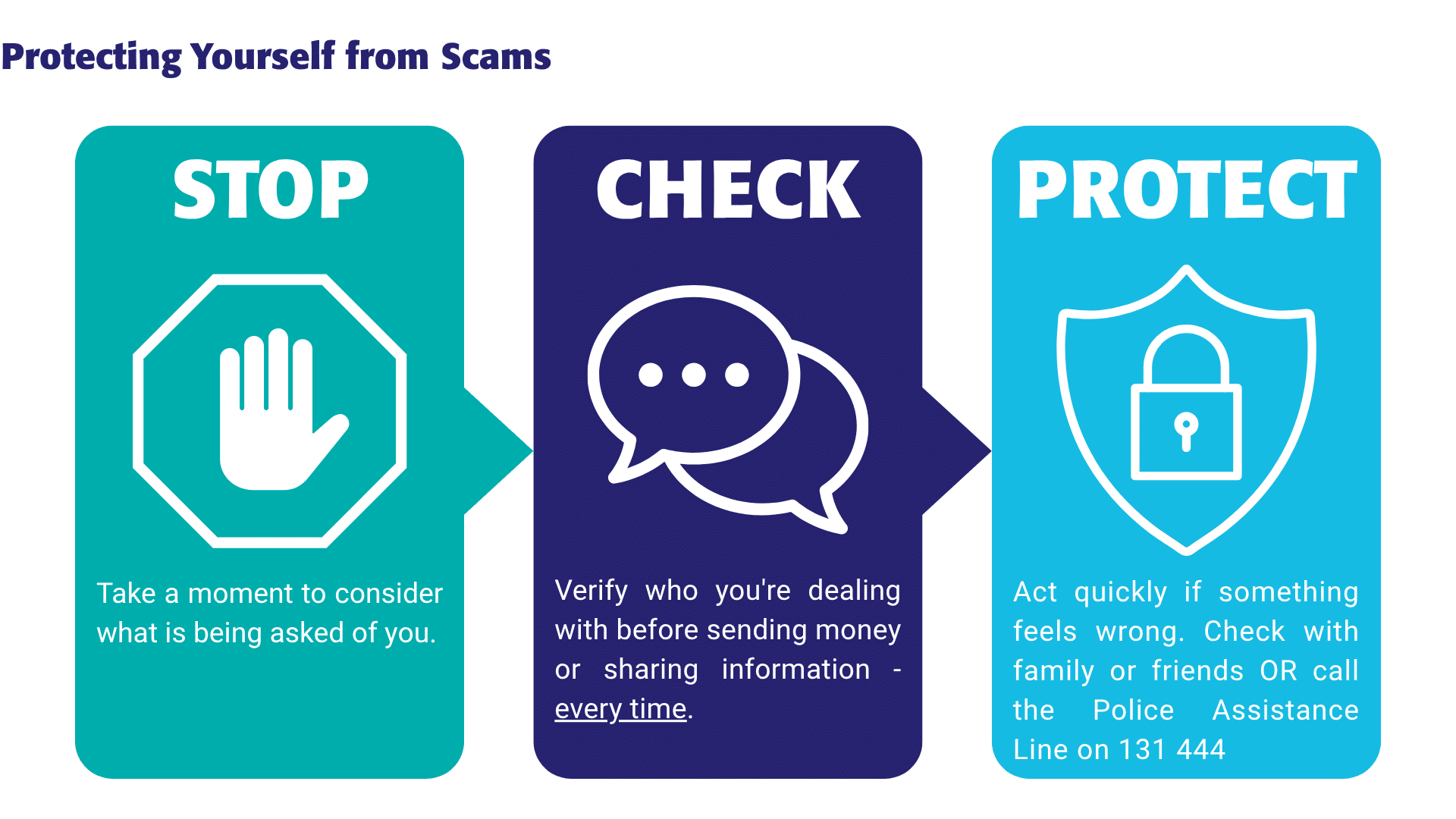
  1. STOP: Take a moment to consider what is being asked of you
  2. CHECK: Verify who you’re dealing with before sending money or sharing information – every time.
  3. PROTECT: Act quickly if something feels wrong.

If something feels wrong, you can always check with family or friends, call the Police Assistance Line on 131 444, or report the scam at scamwatch.gov.au. If you are in immediate danger, or there is an emergency, call 000.

These clips were presented at the Co.As.It. and Custodio Scam Awareness and Prevention Information Session on Saturday 20 July. The full presentation was conducted by Council of the Ageing (COTA) NSW and ScamWatch. It can be viewed on the COTA Website.

Helping protect against scam payments quickly.

Custodio creates a safe way for individuals, families, friends and guardians to watch for possible scams. They discreetly monitor payment activity and alert when something looks unusual or matches known scam patterns. This helps stop prevent scams early and enables caring conversations before harm occurs.

Custodio is built on the Australian Consumer Data Right (CDR), an Australian Government legislated and regulated system giving you the right to securely share your own banking data with accredited providers. Banking was the first sector to comply. The CDR is administered by the ACCC and enforces strict security and privacy, so your information remains safe and secure.

Learn More About Custodio

The information on this page was sourced from Jayde Richmond at the National Anti-Scam Centre, Dr Kate Gould from Monash University,  Detective Senior Constable Denise Bozikis of Burwood Police Area Command, and Custodio. We thank them for their support.